

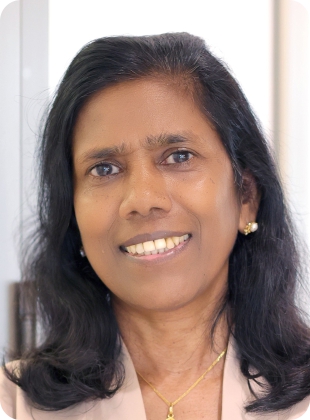
Prof Valsamma Eapen (Australia)
Eapen is a Scientia Professor & Chair of Child Psychiatry at University of New South Wales (UNSW) Sydney and Head of the Clinical Academic Unit at South-Western Sydney Health District. She is a National Health and Medical Research Council (NHMRC) Senior Research Leadership Fellow and has been inducted as a Fellow of the Australian Academy of Health and Medical Sciences (AAHMS). She is known internationally for her clinical and research expertise in Neurodevelopmental disorders including Tourette Syndrome and related disorders. She is Director of an NHMRC Centre of Research Excellence in child and family health focussing on research into neurodevelopmental and child mental health disorders. Eapen is President, International Neuropsychiatric Association; Board member, World Psychiatric Association; and Chair, Faculty of Child and Adolescent Psychiatry, Royal Australian and New Zealand College of Psychiatry. She has >500 publications and is currently part of research programs totalling >40 million in funding.
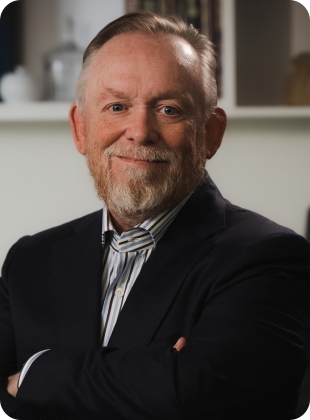
Prof David Coghill (Australia)
Dave Coghill is the Financial Markets Foundation Chair of Developmental Mental Health at the University of Melbourne. His research focuses on increasing understanding of child and adolescent mental health using a wide range of approaches. He has maintained a strong clinical presence and his ADHD clinical care pathway is recognized as world leading. He places a strong emphasis on developing systems that can rapidly transfer research evidence into routine clinical practice and the development of evidence-based guidelines. He works clinically at the Parkville Youth Mental Health and Wellbeing Service.
Prof Colin Shapiro (Canada)
Dr Colin Shapiro trained in medicine at the University of the Witwatersrand, South Africa, and completed his internship at Baragwanath Hospital in Soweto. He was later invited to undertake a PhD in Scotland under the supervision of Professor Ian Oswald, a pioneer in sleep research. Following his PhD, Dr Shapiro completed his psychiatry training in Edinburgh and subsequently joined the Department of Psychiatry as a staff member. Four years later, he was recruited to the University of Toronto as a Full Professor in Psychiatry, where he established an internationally recognised career in sleep medicine and psychiatry. Dr Shapiro is the founding President of the International Neuropsychiatric Association (INA) and co-founder of the British Sleep Society alongside the late Sir Neil Douglas. Throughout his career, he has supervised and trained more than 40 fellows, published over 333 scientific papers, authored 25 patient-focused booklets, and contributed to or authored eight academic books. He served as editor of a psychiatry journal for 18 years and has edited the sleep section of the journal Frontiers in Sleep since its inception. Dr Shapiro also coined the names of two psychiatric conditions, “Hypnogigly” and “Sexsomnia,” with the latter gaining significant international recognition.
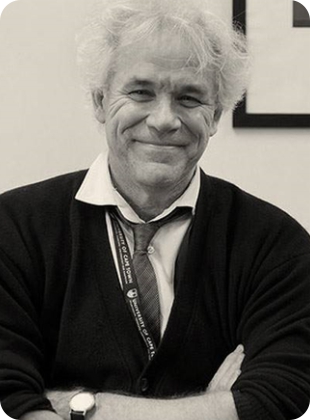
Prof Mark Solms (South Africa)
Professor Mark Solms is Director of Neuropsychology at the Neuroscience Institute of the University of Cape Town. He is also Honorary Lecturer in Neurosurgery at the St Bartholomew’s & Royal London Hospital School of Medicine and an Honorary Fellow of the American College of Psychiatrists. He is a member of the British Psychoanalytical Society and the American and South African Psychoanalytic Associations. He has received numerous honours and awards, including the Sigourney Prize. He has published 350 scientific papers, and nine books, the latest being The Only Cure (2026). He is the authorized editor and translator of the Revised Standard Edition of the Complete Psychological Works of Sigmund Freud (24 volumes) and the forthcoming Complete Neuroscientific Works of Sigmund Freud (4 volumes).
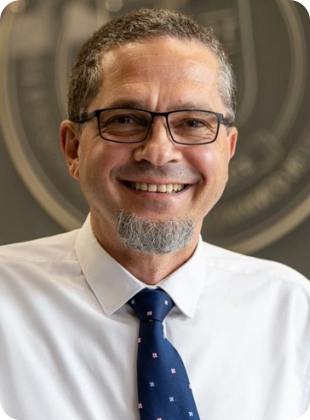
Prof Dana Niehaus (South Africa)
Prof Dana Niehaus completed his undergraduate studies at the University of the Free State. After an additional two-year research stint focused on Fabry disease genetics at Mount Sinai School of Medicine in New York, he commenced his training as registrar in the Department of Psychiatry at Stellenbosch University. He has spent the last 23 years in the dual role of academic and psychiatrist at Stikland Hospital, first in Acute Female Services and later as subspecialist in Psychogeriatric Services. During this period, he completed his doctoral degrees in Psychiatry (focusing on endophenotypes in schizophrenia) and a MPhil in Geriatric Psychiatry. Since 2017 he has been heading the Psychogeriatric Services unit at Stikland Hospital.
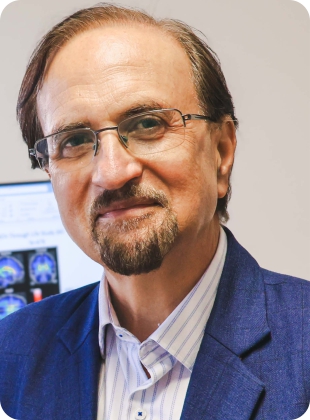
Prof Perminder Sachdev (Australia)
Perminder Sachdev AM MBBS MD FRANZCP PhD FAHMS is Scientia Professor of Neuropsychiatry, Co-Director of the Centre for Healthy Brain Ageing (CHeBA), UNSW Sydney, Clinical Director of the Neuropsychiatric Institute (NPI) at the Prince of Wales Hospital, Sydney, and Director of the Centre of Research Excellence in Vascular Contributions to Dementia. He is deputy-director of the Australian Dementia Network. His major areas of research are drug-induced movement disorders, brain imaging, cognitive ageing and dementia, especially vascular cognitive impairment. He has published over 1000 peer-reviewed journal papers and 7 books, including one for lay readers (The Yipping Tiger and other tales from the neuropsychiatric clinic) and a book of poems (A migrant’s musings). He was named NSW Scientist of the year for Biomedical Sciences in 2010. In 2011, he was appointed Member of the Order of Australia (AM) for services to medical research. He was awarded the Ryman Prize in 2022 by an international jury for the most significant contributions world-wide toward the health of older people. In 2024, he was invited to deliver the Lishman Oration by the International Neuropsychiatric Association. In 2025, he was awarded the Lifetime Achievement Award at the Australian Dementia Research Forum.
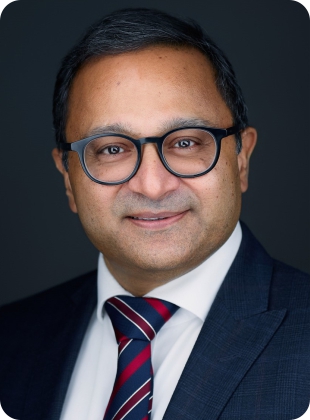
Dr Niruj Agrawal (UK)
Niruj Agrawal is a Consultant Neuropsychiatrist at Atkinson Morley Regional Neurosciences Centre, St George’s Hospital, London and an Honorary Senior Lecturer at City St George’s, University of London. He was the lead clinician for the Regional Neuropsychiatry service for 18 years. He led development of regional functional neurological disorder service, developing new group treatments. He has particular interest in the neuropsychiatric consequences of traumatic brain injuries, neuropsychiatric disorders associated with neurological illnesses and functional neurological disorders. He is a fellow of the Royal College of Psychiatrists (FRCPsych) and is ex vice chair of the Faculty of Neuropsychiatry (FoN) at the Royal College of Psychiatrists. He is a member of the Examinations Committee of the Royal College of Psychiatrists involved in setting and monitoring of theory and clinical postgraduate exams in Psychiatry (MRCPsych) in the UK. He is on the executive committee of the Faculty of Neuropsychiatry at the Royal College of Psychiatrists and is the Chair of the UK Neuropsychiatry Medico-legal Group. His research interests include functional neurological disorders, depression in neurological disorders, neuropsychiatric conditions in neurological settings and neuropsychiatric service provision. He has published over 120 international peer reviewed papers and book chapters. He is on the editorial boards of BJPsych Open and BJPsych Bulletin. He is the lead co-editor the Oxford Textbook of Neuropsychiatry (2020) and Essential Neuroscience for Psychiatrists (RCPsych and Cambridge University Press, 2025). He is the lead co-editer of the Oxford Textbook of TBI which will be published in September 2026. He also works as a neuropsychiatry medico-legal expert in civil cases in the areas of personal injury and medical negligence. He receives instructions from the claimants as well as defendants.
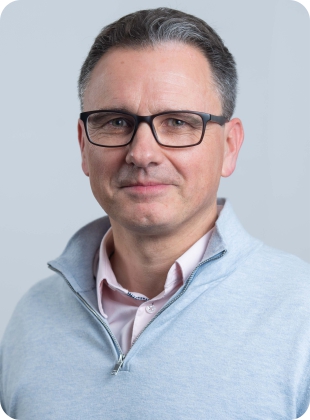
Dr Tim Nicholson (UK)
Dr Tim Nicholson is a Reader (Associate Professor) in Neuropsychiatry at the Institute of Psychiatry Psychology & Neuroscience (IoPPN), King’s College London, and leads the Neuropsychiatry Research and Education Group (NREG). He is an Honorary Consultant Neuropsychiatrist at the South London and Maudsley NHS Foundation and King’s College Hospital Foundation Trusts. His clinical and research work focuses on Functional Neurological Disorder (FND), immunopsychiatry and broader neuropsychiatric disorders - including those resulting from COVID-19. He has over 25 years of experience working clinically with FND and related disorders. FND was the topic of his PhD and the majority of his subsequent research activity including leading on studies into mechanisms, outcome measures and novel treatments such as Transcranial Magnetic Stimulation (TMS) and more recently psychedelics, Virtual Reality and Brain-Computer Interfaces. He has published over 180 peer reviewed papers, over half of which are on FND, edited a textbook on FND, written 7 book chapters on FND and multiple books on general pharmacology and specialist psychopharmacology. He is board member, co-chair of the patient liaison and on the diagnosis and outcome measure committees of the FND Society and on the board of the UK FND network. He is on the board of the International Neuropsychiatry Association and co-chairs the Education and Trainee liaison committee. He was awarded RCPsych Researcher of the Year in 2022.