

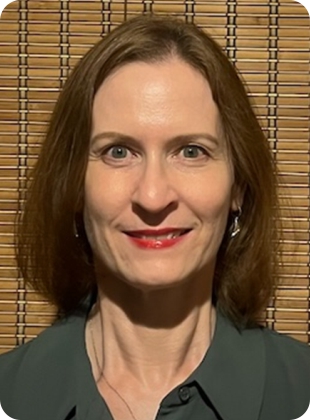
Prof Carla Kotzé (South Africa)
Carla, a subspecialist in forensic psychiatry is an Associate Professor at the University of Pretoria and the Head of Geriatric Psychiatry at Weskoppies Hospital. She holds prominent roles including Chair of the Faculty of Health Sciences Research Ethics Committee at UP, member of the International Psychogeriatric Association Board of Directors, and President of the Colleges of Medicine of South Africa Council of Psychiatrists. She integrates her extensive clinical, teaching, and research experience to enhance ethical practice and mental health care for older individuals.

Dr Fiona Schulte (South Africa)
Dr Fiona Schulte studied medicine, anthropology and gender studies in Germany and graduated in 1997. She qualified as a child & adolescent psychiatrist and psychotherapist in Germany. Upon immigration to South Africa Dr Schulte became a Fellow of the College of Psychiatrist in 2010, having trained at Wits University and UCT. She completed her Certificate of Child & Adolescent Psychiatry in 2014 based at Tygerberg Hospital/Stellenbosch University. Dr Schulte holds a Tavistock Diploma in Therapeutic Communications with Children and is a trained infant mental health therapist. Dr Schulte worked as a consultant in various tertiary psychiatric hospitals and in private practice. From 2018 until 2022, Dr Schulte was consulting for the Department of Justice with regards to criminal capacity assessments of juvenile offenders at Valkenberg Hospital. She is currently employed in the Child Psychiatry and Family Unit at Tygerberg Hospital. Dr Schulte is a senior lecturer in the Department of Psychiatry at Stellenbosch University and a sessional lecturer in Department of Humanities/University of Cape Town. Dr Schulte is the past Convenor of the Child & Adolescent Special Interests Group (CAPSIG) of the South African Society of Psychiatrists (SASOP) and a past Board member of SAACAPAP (South African Association of Child & Adolescent psychiatrists and Allied Professions).

Dr Christina van der Merwe (South Africa)
Dr Christina van der Merwe is a registered Clinical Psychologist with extensive experience across clinical practice, academia, organisational psychology, and psychometric assessment, with a specialised focus on child mental health and eating disorders. She served as Principal Clinical Psychologist at Tygerberg Hospital and Senior Lecturer in the Department of Psychiatry at Stellenbosch University before relocating to George to establish a private practice. Dr van der Merwe has formal training in evidence-based treatment of eating disorders in adolescents and young adults and has presented locally and internationally, contributing to peer-reviewed publications. Her work reflects a strong commitment to integrating biological and psychological science with practical, compassionate clinical care.

Dr Editruda Gamassa (South Africa)
Dr Editruda Gamassa is a dedicated psychiatrist specializing in geriatric psychiatry at Stellenbosch University. She completed her undergraduate medical training and Master of Medicine in Psychiatry (MMed) in Tanzania, establishing a strong foundation in clinical practice in resource-limited settings. She is passionate about geriatric care and improving mental health services for older adults.
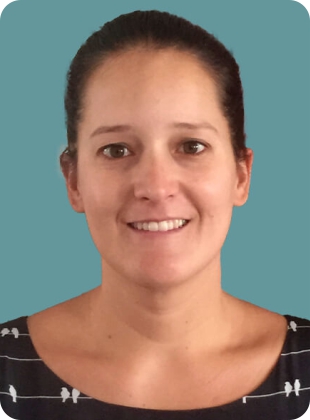
Dr Kerry-Ann Louw (South Africa)
Dr Kerry-Ann Louw is a Consultation Liaison Psychiatrist and senior lecturer at Stellenbosch University. She is the Head of Clinical Unit of adult psychiatry services and runs consultation-liaison psychiatry services at Tygerberg Hospital. Kerry completed both her undergraduate and postgraduate training at the University of Cape Town obtaining her MPhil in Liaison Mental Health in 2015. Her special interests include the complex interactions between psychiatric and medical illnesses, chronic pain, clinician wellness, women’s mental health and bioethics.
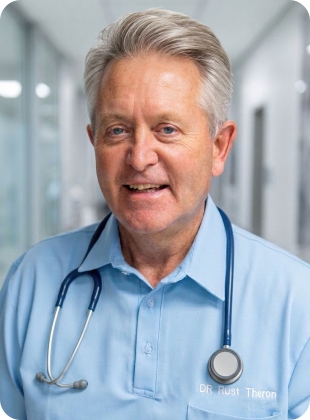
Dr Rust Theron (South Africa)
Dr Theron obtained his MBChB degree in 1988 and his MMed degree cum laude in 1995. Both from the University of Stellenbosch. He started his private practise in 1996 at Medi-Clinic Durbanville and has been working there ever since. Medicine is his biggest passion in life and besides loving sport (rugby), reading and gardening – his other main passion is to work with students. This was the motivation behind the project which he initiated in 2013 with the medical faculty of the University of Stellenbosch. Students in their 4th or 5th year of medical studies, doing their mid-clinical rotation in Internal Medicine, rotate for 1 month in a private hospital. The project was done as a trial in 2014 when 4 students per rotation came to Durbanville Mediclinic and worked one-on-one with a physician. This was such a huge success, that the project was extended to Louis Leipoldt, Cape Gate Mediclinic, Panorama Mediclinic and Gatesville Melomed. This inspired him to do a M Phil degree in Health Professions Educations which he completed in December 2018. A total of 18 students per rotation and 10 rotations per year were done until Covid-19 stopped everything. The programme was restarted at the beginning of 2024 and is going strong. He makes time to stay on top of current trends and regularly does talks for GP’s and his piers. During 2022 and 2023 he did a bi-weekly lunch chat via Zoom in collaboration with De Nova Medica with GP’s across South Africa. The new lunch Chats series started in October 2024 and has been going strong with up to 8000 GP’s joining this 30 minute chat on topics that are relevant to them. The new series for 2026 has started in March this year and is doing exceptionally well. He is married 38 years this year and has 3 children aged 34, 32 and 31. His oldest son is working as a Registrar in Urology at the Tygerberg campus, University of Stellenbosch, the middle son has just qualified as a Neurologist and will be starting his private practise in June at Durbanville Mediclinic and his youngest daughter is a GP in Durbanville. He has 3 grandchildren, 2 boys, aged 5 and 4 and one princess who is now nearly 4 months old. Obviously, they are the most good looking, well-mannered and cleverest grandchildren ever born. He was the head of the Covid team at Mediclinic Durbanville and he and the rest of the team had very good results with their treatment regimes. He’s also on the board of trustees at Durbanville Mediclinic as well as the chairman of the Clinical committee. He recently was part of a team of 4 who published a cookbook to help obese patients on their journey to lose weight – the book is called “Say no to obecity” and has been reprinted 3 times. It will also be available in certain Woolworths branches from June.
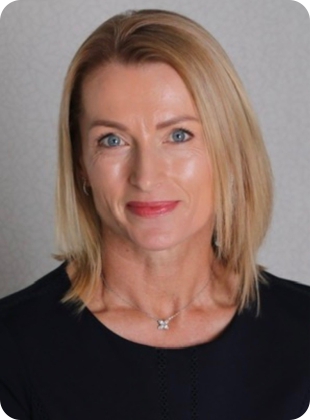
Dr Elsa du Toit (South Africa)
Dr Elsa du Toit is a maternal mental health specialist at Panorama Healthcare Psychiatry Practice with over 25 years of clinical experience, including more than 15 years dedicated to perinatal psychiatry. She began her medical career as a general practitioner in 2000, completed a psychology honours degree cum laude at Stellenbosch University, and qualified as a general psychiatrist in 2010. For over a decade, she has worked across both public and private healthcare sectors, providing specialised perinatal psychiatric care. Her doctoral research (PhD, 2020) examined the intersection between mental illness and unplanned pregnancy, with a focus on maternal and neonatal outcomes and population vulnerability. Dr du Toit is a member of the 2026 Harvard Collective Psychiatry Group, led by Professors Freeman and Cohen, and serves on the SASOP Women’s Mental Health Executive Committee. She is also the founder of drelsadutoit.com, an online learning hub offering up-to-date education and training in perinatal mental health.

Dr Sheana Jones (South Africa)
Dr Sheana Jones was born in Libya, educated in Scotland, and completed her specialist training in South Africa. She practises as a gynaecologist and made a deliberate transition away from obstetrics to focus on gynaecological care and achieving a balanced quality of life. Her clinical interests include menopause management, an area she approaches with both professional expertise and personal insight. She is actively involved in teaching and values the opportunity to mentor students, while continuing to enjoy operative gynaecology. Outside her professional role, she is committed to her Christian faith and enjoys healthy living, wine tasting, travel and jigsaw puzzles.
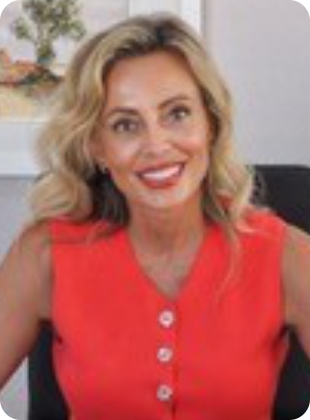
Dr Azelle Mayne (South Africa)
Dr Azelle Mayne is a psychiatrist in private practice in Cape Town with over 24 years of clinical experience in mental health. She completed both her undergraduate medical training and postgraduate specialist training at Stellenbosch University and qualified as a psychiatrist in 2001. She subsequently worked in the United Kingdom as a consultant psychiatrist for several years before returning to South Africa. After returning, Dr Mayne established her private practice at Panorama Mediclinic, where she has now been in practice for 22 years. She is also a founding member of the Panorama Psychiatry and Memory Clinic, where she helped develop services focused on cognitive assessment, dementia, and memory-related disorders. Dr Mayne has a special interest in women’s mental health, particularly the interaction between hormonal changes and psychiatric wellbeing during perimenopause and menopause. In 2025, she founded The Midlife Mind, an educational and clinical platform dedicated to bridging psychiatry, menopause medicine, and hormonal health. Through her clinical work, teaching, and speaking engagements, Dr Mayne is passionate about translating evidence-based psychiatric knowledge into practical strategies that help women navigate the cognitive, emotional, and psychological challenges of midlife with greater clarity, resilience, and confidence.
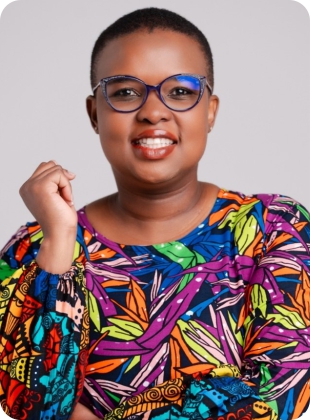
Dr Lihle Mgweba-Bewana (South Africa)
Dr Lihle Mgweba-Bewana is a Neuropsychiatrist, currently based at Weskoppies Hospital Pretoria. Her qualifications include a Batchelor of Medicine and Surgery degree (UCT); Diploma in Mental Health (CMSA - Colleges of Medicine South Africa); Fellowship in Psychiatry (CMSA); Master of Medicine (UCT), with a distinction in the dissertation component and a Master of Philosophy (UCT) degree. She has also obtained a Subspeciality Certificate in Neuropsychiatry from the CMSA. This is a field within Psychiatry, that bridges the specialities of Psychiatry and Neurology. Her interests within the mental health space are diverse. Some of these interests include Neuropsychiatry; Cultural Psychiatry; Nutritional Psychiatry and Sports Psychiatry. She also has a growing interest on the interface between mental health and technological advancements, which include AI. This interest extends to how these technologies can be used for good and also the inherent ethical, governance and safety considerations involved in the increasing use of such technologies. She is also involved in mental health advocacy through media interviews, and selective social media engagements.
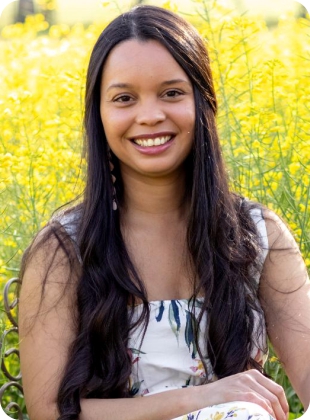
Ms Kalle Pillay (South Africa)
Kalle Pillay is a clinical dietitian at Groote Schuur Hospital, specializing in the nutritional management of complex neurological and psychiatric conditions. She holds a BSc in Dietetics (UWC) and a Master’s in Food and Nutrition Security (SU). She supports patients across Neurology including those with Genetic conditions and Motor Neuron Disease, Dermatology and the Psychiatric wards. However, her primary passion lies within Psychiatry, guiding those with eating disorders toward physical nourishment and a healed relationship with food.
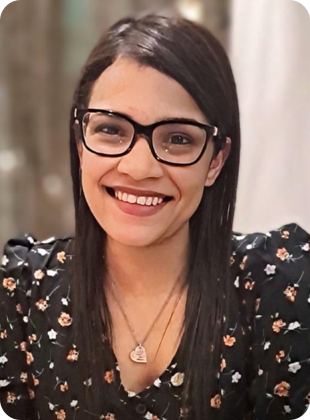
Dr Anthea Maziena (South Africa)
Dr Anthea Maziena is a senior lecturer in the Department of Psychiatry at Stellenbosch University and consultant psychiatrist in the male acute service at Stikland hospital. She obtained a BSc in chemical, molecular and cellular sciences at UCT with majors in Biochemistry and Physiology. She then completed her MBBCh at the University of the Witwatersrand, followed by specialist psychiatric training at Stellenbosch University, where she obtained both the MMed (Psychiatry) and FCPsych(SA). Her academic and clinical interests focus on Schizophrenia and Bipolar Disorder, with particular attention to advancing evidence-based, patient-centered care. In addition to her clinical and academic work, she is committed to strengthening mental health systems. She is actively engaged in the development and implementation of strategies aimed at improving service delivery, especially within resource-limited settings.
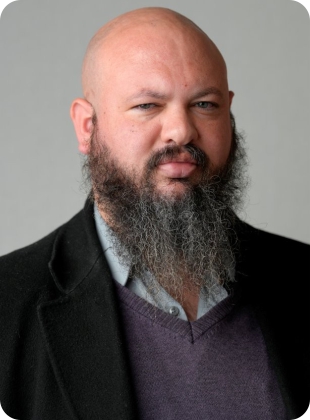
Mr Clayton Arendse (South Africa)
Clayton Albert Arendse is the Principal Clinical Psychologist at Tygerberg Hospital and lecturer at Stellenbosch University in the Department of Psychiatry. He currently works in the Eating Disorders Unit and is involved in supervision of both registrars and intern psychologists for. His interests are Dialectical Behaviour Therapy, Cognitive Behaviour Therapy, Mindfulness and Mindfulness based Cognitive Therapy, Psychology and culture/sociopolitical aspects of psychology, therapeutic approaches to recovery from substance dependence, psychodynamic psychotherapy and Jungian psychotherapy. He is the convenor of the MPhil Mindfulness in the Department of Psychiatry at Stellenbosch University.
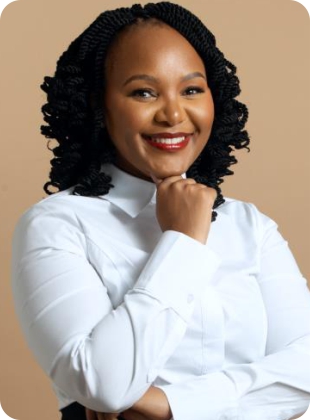
Dr Tshepiso Palweni-Zwane (South Africa)
Dr. Tshepiso Palweni-Zwane is a specialist psychiatrist and academic at Weskoppies Hospital, affiliated with the University of Pretoria (UP). She obtained her Bachelor of Medicine and Surgery (MBBCH) from the University of the Witwatersrand in 2014, where her interest in mental health was first ignited. Following her internship and her work as a medical officer in a regional psychiatry unit, she pursued specialist training in psychiatry. She holds a Master of Medicine (Psychiatry) from the University of Pretoria and is a Fellow of the Colleges of Medicine of South Africa (CMSA). Dr. Palweni-Zwane is a published author in the South African Journal of Psychiatry and is actively involved in undergraduate teaching, postgraduate supervision, and research oversight. She is passionate about training future clinicians, with a strong emphasis on ethical practice, clinical competence, and improving access to high-quality mental healthcare. She coordinates psychotherapy training for psychiatry registrars in collaboration with the Department of Psychology. Her clinical and academic interests include strengthening psychiatrists’ psychological skills, women’s mental health, and developing integrated care approaches for patients with multiple comorbidities, including severe mental illness, medical conditions, and substance use disorders. In 2025, she received a Service Excellence Award for her contributions to academic development, particularly in enhancing ward-based teaching and supporting trainees in the conceptualisation of complex clinical cases. She was also invited as a panelist at the most recent SASOP Congress in the Eastern Cape.
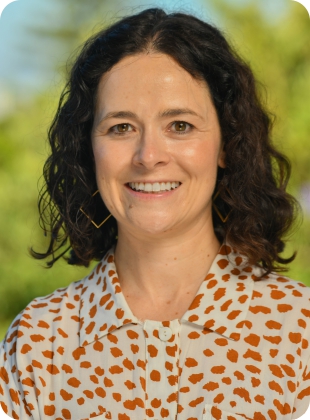
Dr Tessa Roos (South Africa)
Dr Tessa Roos is a psychiatrist in private practice in Cape Town. She works at UCT private hospital where she has a special interest in consultation liaison psychiatry. She has a diploma in Older Adult Mental Health through the Royal College of Psychiatrists. In 2020 she completed the certificate in mindfulness teaching through Stellenbosch University and the Mindfulness Institute of South Africa (IMISA). She has served on the board of IMISA, taught the Mindfulness Based Stress Reduction (MBSR) programs and developed a mindfulness curriculum at UCT for the fourth year medical students which has been running since 2023.